The Twelve Rāśis of Vedic Astrology
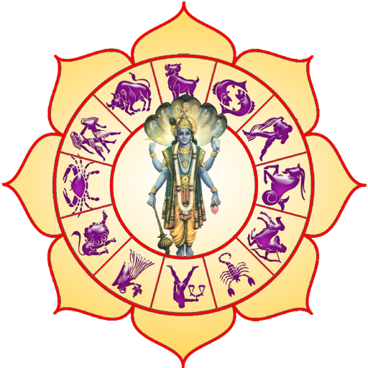
The twelve rāśis of Vedic astrology form the foundational framework through which the movements of the grahas are interpreted. Rooted in the Bṛhat Parāśara Horā Śāstra and allied classical texts, the rāśi‑chakra represents not merely twelve spatial divisions of the zodiac but twelve archetypal fields of cosmic intelligence. Each rāśi embodies a distinct blend of elemental forces, guṇas, deities, and symbolic impulses that shape human temperament, destiny, and experience.
Meṣa (Aries): The Impulse of Emergence
 Meṣa marks the beginning of the zodiac, symbolizing birth, initiative, and primal fire. Ruled by Mars, it expresses courage, independence, and the instinct to act. Its movable nature reflects dynamism and pioneering energy. In charts, Meṣa signifies beginnings, assertion, and the raw force of life pushing forward.
2 Vṛṣabha (Taurus): The Field of Stability
 Vṛṣabha, ruled by Venus, represents earthiness, sensuality, and preservation. It is the rāśi of material consolidation, beauty, and value. Its fixed nature grants endurance and loyalty. Vṛṣabha symbolizes the desire to build, protect, and enjoy the fruits of life.
3 Mithuna (Gemini): The Realm of Duality and Thought
 Governed by Mercury, Mithuna embodies communication, curiosity, and intellectual movement. Its dual form reflects multiplicity, adaptability, and the interplay of ideas. Mithuna is the sphere of learning, dialogue, and the human urge to connect through language.
4 Karka (Cancer): The Waters of Emotion and Memory
 Karka, ruled by the Moon, is the rāśi of nurturing, protection, and emotional depth. Its watery nature signifies intuition and sensitivity. Karka governs home, ancestry, and the inner world. It is the seat of compassion and the instinct to shelter and preserve.
5 Siṃha (Leo): The Radiance of Sovereignty
 Siṃha, ruled by the Sun, symbolizes leadership, dignity, and creative self‑expression. It is the realm of authority, inspiration, and the fire of individuality. Siṃha represents the human aspiration to shine, to create, and to uphold dharma through noble action.
6 Kanyā (Virgo): The Precision of Analysis
 Kanyā, governed by Mercury, expresses discernment, service, and meticulous order. It is the rāśi of refinement, health, and practical intelligence. Kanyā’s earthy and dual nature reflects adaptability grounded in realism. It represents the impulse to perfect and purify.
7 Tulā (Libra): The Balance of Relationship
 Ruled by Venus, Tulā signifies harmony, justice, and partnership. It is the only rāśi represented by an inanimate symbol—the scales—indicating objectivity and equilibrium. Tulā governs agreements, aesthetics, and the search for balance in human interactions.
8 Vṛścika (Scorpio): The Depth of Transformation
 Vṛścika, ruled by Mars (and Ketu in some traditions), embodies intensity, secrecy, and transformative power. Its fixed water nature symbolizes emotional depth and regenerative force. Vṛścika governs hidden realms, crises, and the alchemical process of inner change.
9 Dhanu (Sagittarius): The Path of Wisdom

Dhanu, ruled by Jupiter, represents philosophy, expansion, and righteous pursuit. Its symbol—the archer—reflects aspiration toward higher truth. Dhanu governs learning, travel, and the quest for meaning. It is the rāśi of optimism and spiritual direction.
10 Makara (Capricorn): The Discipline of Structure

Makara, ruled by Saturn, symbolizes responsibility, endurance, and pragmatic ambition. Its earthy, movable nature reflects steady progress and disciplined effort. Makara governs institutions, authority, and the long arc of karma that shapes worldly achievement.
11 Kumbha (Aquarius): The Vision of the Collective

Kumbha, ruled by Saturn (and Rāhu in some traditions), expresses innovation, humanitarianism, and detachment. It is the rāśi of systems, networks, and futuristic thinking. Kumbha represents the impulse to reform, to question norms, and to serve the larger community.
12 Mīna (Pisces): The Ocean of Dissolution

Mīna, ruled by Jupiter, symbolizes compassion, imagination, and spiritual surrender. Its dual fish symbol reflects the tension between worldly involvement and transcendence. Mīna governs intuition, dreams, and the dissolution of boundaries into universal consciousness.
Conclusion
The twelve rāśis are not merely astronomical divisions but living archetypes that encode the diversity of human experience. Each rāśi channels a unique expression of cosmic intelligence, shaping the grahas that occupy them and coloring the karmic patterns of the native. Together, they form a complete cycle—from emergence in Meṣa to dissolution in Mīna—mirroring the journey of the soul through creation, experience, and liberation.
The study of rāśis, therefore, is not only a technical foundation of Jyotiṣa but also a contemplative exploration of the forces that animate life itself.